


Acid Reflux isn’t just chemical
Treat the root cause behind acid reflux, heartburn and swallowing difficulties.
Class I
medical device CE-marked, invented and developed in Sweden.
150k+
people treated with IQoro
97%
experience symptom improvement – scientifically studied
4K+
verified customer reviews
The explanation most people are given and why it’s incomplete
For years, the standard advice has pointed at food, acid, and lifestyle. You manage. You adjust. You medicate. But the symptoms keep coming back.
Assumption
“It’s the food. It’s the acid. Cut out coffee, avoid spice, take an antacid.”
the truth
“It’s a muscle problem. The diaphragm is weak, which lets stomach contents move where they shouldn’t.”
The real issue is muscle function
A weakened diaphragm can allow stomach acid and other stomach contents to move upward — often linked to a hiatal hernia. This is the underlying cause behind most reflux-related symptoms. Everything connects back to this.
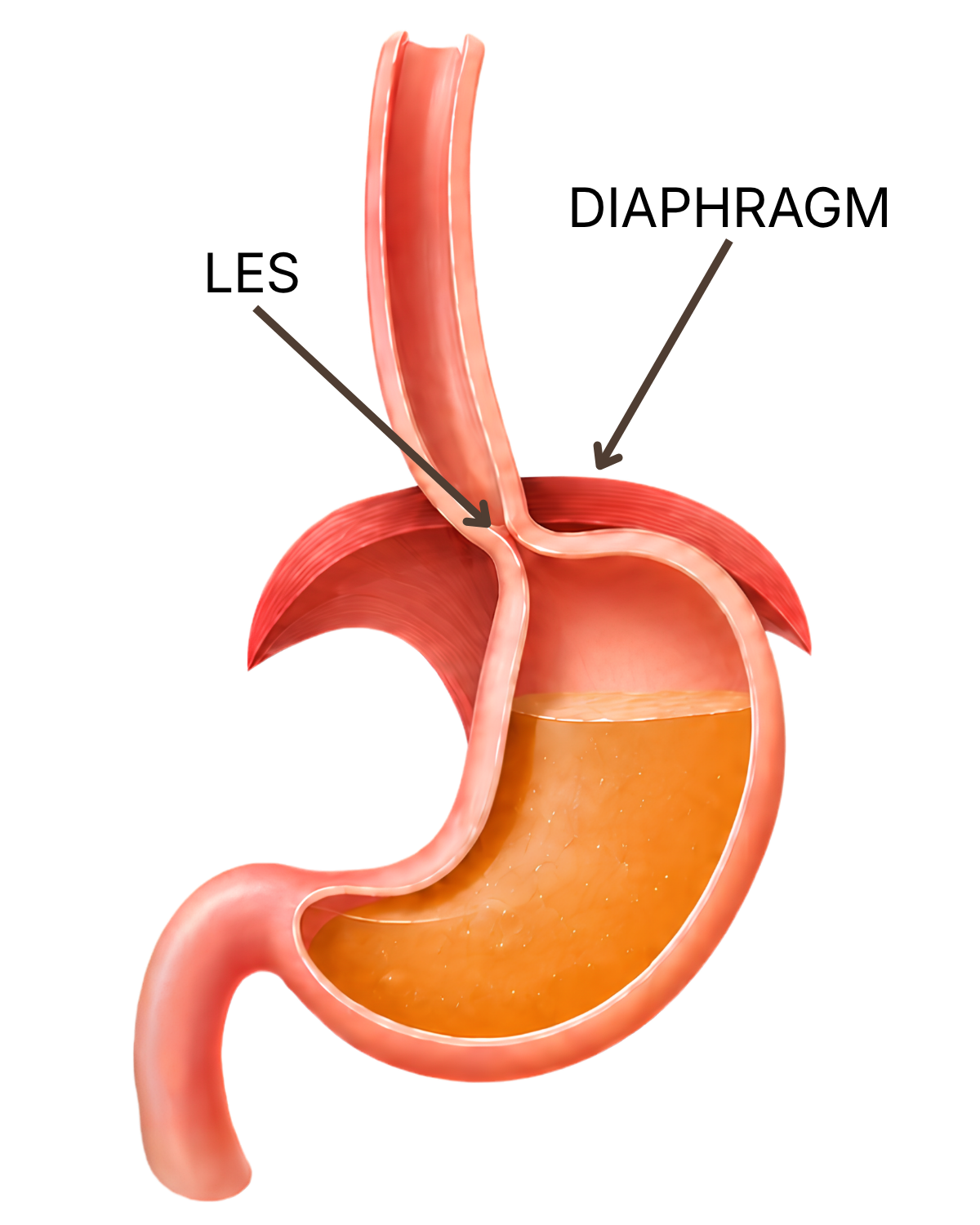
The diaphragm supports the seal
NORMAL FUNCTION
Under normal conditions, the diaphragm supports the lower oesophageal sphincter (LES), helping it maintain a tight seal between the stomach and oesophagus. When the diaphragm is strong, this barrier functions effectively.When function weakens, the seal breaks down
WEAK DIAPHRAGM – HIATUS HERNIA
When the diaphragm weakens, it can no longer support the seal effectively.
The upper part of the stomach can slide up through the diaphragm, moving the LES above it and preventing it from closing properly.
This may cause symptoms such as a lump sensation in the throat, mucus, frequent throat clearing, hoarseness or swallowing difficulties.Hiatal hernia causes acid reflux
ACID REFLUX
When part of the stomach slides up through the diaphragm opening, the LES loses support and may no longer close properly.
This creates a swinging-door effect, allowing stomach contents and acid to flow back into the oesophagus.Function can be restored
RESTORED FUNCTION
Unlike acid suppression, neuromuscular training targets the muscles directly — building strength and coordination over time.
The goal is to restore function, not mask symptoms.
Sign up for our newsletter
Get insights and special offers
Different symptoms. One cause.
These conditions are often treated separately, but most are linked to the same underlying problem: a weakened diaphragm – a hiatal hernia. This can affect several functions from the mouth to the stomach, while weakened muscles higher up in the same chain can affect the airways.
Click on the symptoms to explore
Acid reflux
When the diaphragm is weakened, the lower oesophageal sphincter (LES) gets less support and may not close as tightly. This allows stomach acid and other stomach contents to move up into the oesophagus more easily.
Seal weakens → acid risesLump in throat
A hiatal hernia can affect the function of the oesophagus and throat. This can cause a cramping sensation or the feeling of a lump in the throat.
Throat & Oesophagus afffected → Lump sensationMucus in throat
When stomach acid reaches the oesophagus or throat, it can irritate the mucous membranes and trigger increased mucus production. This can lead to thick mucus and frequent throat clearing.
ACID IRRITATES → MORE MUCUSHeartburn
When the diaphragm is weakened, the lower oesophageal sphincter may not close as tightly. Stomach acid can then leak into the oesophagus and cause the burning sensation known as heartburn.
ACID LEAKS UP → heartburnDifficulty swallowing
With a hiatal hernia, the position and function of the throat and oesophagus can be affected, making it harder for food to pass down to the stomach. This can be particularly noticeable when swallowing solid or dry foods.
Throat & Oesophagus afffected → swallowing difficultiesSnoring
When the muscles in the throat and soft palate are weakened, the airway can become narrower during sleep. The soft palate can then vibrate and create the sound of snoring.
weaker throat muscles → vibration → SnoringMost treatments manage the symptom. Not the cause.
Lifestyle changes, medication and surgery all have their place. But none of them train the underlying muscle function — so symptoms can return when the underlying weakness remains.
Method
Relieves symptoms
Treats the cause
Non-invasive
Long-term
Lifestyle
Relieves symptoms
Treats the cause
Non-invasive
Long-term
Medication
Relieves symptoms
Treats the cause
Non-invasive
Long-term
Relieves symptoms
Treats the cause
Non-invasive
Long-term
Surgery
Relieves symptoms
Treats the cause
Non-invasive
Long-term
Yes
Partly
No
Train the muscles. Regain function.
Neuromuscular training is a medically recognised approach that uses targeted exercise to strengthen and coordinate muscles involved in swallowing – from the mouth and throat down to the diaphragm and its support of the lower oesophageal sphincter (LES) – as well as muscles in the upper airways. It addresses the root cause – not just the symptoms.
As the muscles strengthen, function can improve along the entire chain – including the diaphragm’s support of the LES, helping it stay tightly closed. First symptom improvements can be noticed within 4–8 weeks.
A weakened diaphragm can affect several functions from the mouth to the stomach, while weakened muscles higher up in the same chain can affect the airways. By strengthening muscles along this chain, IQoro can improve several symptoms at the same time.
The research behind IQoro includes 17 internationally published, peer-reviewed scientific studies conducted at Swedish universities by multidisciplinary research teams, supported by government and research funding.
Train for at least 6 months and until you have achieved your desired result. Then gradually reduce to maintenance training to help maintain the improved function over time.
How to train with IQoro
IQoro provides neuromuscular training that stimulates the nervous system and activates and strengthens muscles along the chain from the mouth and throat down to the diaphragm. This supports swallowing and upper airway function, while a stronger diaphragm helps the lower oesophageal sphincter stay closed.
Step 1
Place and activate
IQoro is placed inside your lips, in front of your teeth. Pull gently outwards while holding back with your lips pressed firmly against the handle.
Step 2
Train for 90 seconds a day
3 × 10-second pulls, three times a day, with at least 2 hours between sessions.
Step 3
Symptoms improves over time
As the muscles strengthen, symptoms improve.
Train for at least 6 months and until you reach your desired result, then gradually reduce to maintenance training.
6-Month money back guarantee · CE marked
Time to first improvement?
Percentage of patients experiencing first improvement over time.
| Time to first improvement | Patients |
|---|---|
| No Improvement yet | 16% |
| Less than 1 month | 15% |
| < 1 – 2 month | 48% |
| < 1 to 3 – 5 months | 75% |
| < 1 to 6 -8 months | 82% |
| +9 months | 84% |
Experience symptom improvement
IQoro addresses the root cause by training weakened muscle function rather than only managing symptoms. It is research-backed, drug-free and comes with a results guarantee.
Trusted by over 150,000 people.
Government-funded research
Scientifically studied. Clinically documented.
The studies consistently show that 97% improved after 6-8 months of training, with 54–73% becoming symptom-free depending on the symptom.
Train muscles
A drug-free approach
that trains function.
IQoro provides a drug-free way to train weakened muscle function rather than only managing symptoms. Neuromuscular training works with the body’s own nervous system and muscles to improve function over time.
NO REGISTRATION REQUIRED
Results guarantee included.
Every purchase on iqoro.com comes with a results guarantee. Train according to the manual for 6 months, and if your symptoms have not improved, you can claim a refund for your IQoro.
Real people.
Real conditions.
-
Dr Eje Åhlander: “I finally got rid of my snoring”
Eje Åhlander, specialist in general medicine, Sweden
Snoring
·
Many years of problem
Eje first heard about IQoro through an acquaintance who told him that the neuromuscular training could help with snoring. He decided to try the method and was surprised by how quickly he noticed a result.
-
Ulla’s swallowing difficulties disappeared and her reflux and snoring improved
Ulla, Sweden
Swallowing difficulties, snoring, hiatal hernia, lump sensation
·
Sveral years
Food became stuck in my throat countless times. I also snored so loudly that it wasn’t always easy for my husband to sleep beside me
-
Klara’s swallowing improved and her snoring disappeared with IQoro
Klara Abrahamsson
Swallowing difficulties, snoring
·
Her whole life
They ordered an IQoro immediately. Klara was initially sceptical and trained irregularly, but small improvements motivated her to follow the instructions consistently.
-
Eine’s speech and swallowing improved with IQoro after a stroke
Eine Sellman, Sweden
Eine Sellman, Sweden
·
3 years
Her speech gradually returned, her swallowing ability improved markedly and the muscles in her face became stronger. As an additional result, Eine also reported that she stopped snoring.
-
Roland snored less and reported no sleep apnoea for a long time
Roland Lönnber, Eva Råbom
Snoring, sleep aponea
·
Several years
It exceeded my expectations. I snore markedly less, and I haven’t had any sleep apnoea for a long time
-
Gary went from ten years of reflux to rarely experiencing discomfort
Gary Sizer
Acid reflux
·
A few years
Gary was initially sceptical and considered the product expensive. He now rarely experiences reflux-related discomfort.
-
Eva stopped snoring after around two months with IQoro
Eva Hjalmarsson, Gothenburg, Sweden
Snoring
·
Don’t know for how long
Two months after Eva began training, she went on a skiing holiday with her children. To her relief, they confirmed that she had stopped snoring.
-
Beverley’s loud snoring was almost gone after 3–4 weeks with IQoro
Beverley D’Silva, United Kingdom
Snoring
·
Several years
Beverley searched for a way to reduce her snoring without relying on medication or surgery. During her research, she found IQoro and began training for a total of 90 seconds each day.
-
Berith’s daily regurgitation disappeared after training with IQoro
Berith Sjöberg, Stockholm
Cough, reflux, swallowing difficulties
·
Several years
A doctor diagnosed Berith with a hiatal hernia and told her that medication was the only available option. After a few weeks of regular training, Berith noticed a clear difference.
IQoro strengthens the diaphragm & improves function.
By strengthening the muscle chain from the mouth to the diaphragm, IQoro addresses the root cause – weakened muscle function – rather than only managing symptoms. This helps improve reflux, heartburn and the feeling of a lump in the throat.
-
Scientifically studied.
Clinically documented. -
Used by over 150,000 people. Thousands of customer reviews.
-
Stimulates the nervous system and strengthens weakened muscles.
-
Free support from real people who know IQoro and the conditions people use it for.