A hiatal hernia causes several unpleasant symptoms – but there is treatment
A hiatal hernia means that the top part of the stomach slides up into the chest cavity which causes various problems. You will soon find out what you can do about it.
Start treating the root causeGet yourself examined
Although your symptoms are likely due to a hiatal hernia, it is important that you are medically examined to be able to rule out serious illness. You can start treatment with IQoro while waiting for examination. Your symptoms will then hopefully decrease. (More about IQoro below.)
Hiatal hernia – this is how it causes your problems
A hiatal hernia means that the diaphragm, a thin muscle that sits like a partition in the upper body, is weakened.
1. The stomach slides up
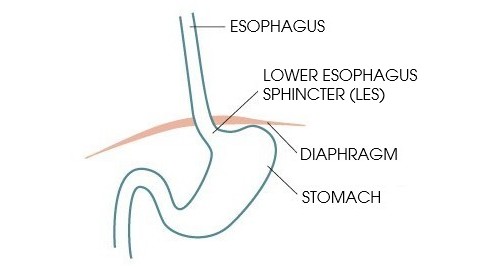
When the diaphragm is weakened, the stomach can slide up above the diaphragm. Since the Lower Esophageal Sphincter (LES) cannot function properly when it is above the diaphragm, stomach acid begins to leak into the oesophagus. In addition, the oesophagus is pressed upwards.
The oesophagus is a bit like an accordion that can be compressed. And when compressed, the swallowing function no longer works normally.
2. Problems occur in the upper oesophageal sphincter
The corrosive stomach acid causes discomfort in the form of heartburn and reflux. But also causes a dry cough and thick phlegm that the oesophagus forms as a defence against stomach acid.
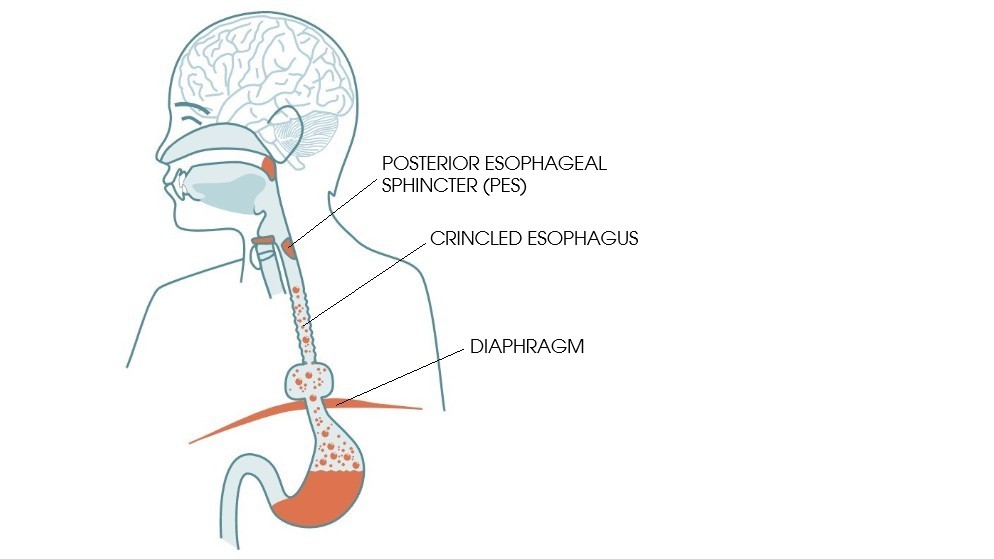
At the opening to the oesophagus is the upper oesophageal sphincter – a muscle that needs to relax to release the food into the oesophagus.
When the oesophagus is compressed the upper oesophageal sphincter cannot relax and open the entrance to the oesophagus sufficiently. This is what gives you the feeling of a lump or a cramping sensation in your throat.
3. Food can get stuck when swallowing
The fact that the upper oesophageal sphincter does not work optimally also means that food can easily get stuck in the pharynx. Liquid foods such as water, yogurt or soup, on the other hand, rarely cause problems.
The stomach that has slipped up into the chest displaces other organs, such as the lungs and heart, which can cause pain across the chest.

What can you do?
When a hiatal hernia is the cause of your problems, training the diaphragm is the only effective way to treat the problem.
The most effective way to train the diaphragm is with IQoro.

“Like new again! It is unbelievably great not having the fear of not being able to swallow properly.“
Review by Berit L – verified customer
“Cured that feeling of a lump in my throat after 1 month of use… am so relieved.”
Review by Veronika B – verified customer
Order IQoro before lunch and we will ship the same day
IQoro is a Swedish invention, made in Nyköping. Our customer support is on hand to answer any questions by e-mail or phone prior and post purchase.
01229 444 823 | [email protected]

How to use IQoro
A simple 30 second routine activates internal muscles.
It provides high-intensity exercise from the lips, throat, oesophagus and down to the diaphragm and upper abdomen.
Three sessions per day is sufficient for maximum results.
That’s how easy it is to carry out the training routine with IQoro.

Get help from training app
The training app helps you get the best possible results from your IQoro.
Custom stopwatch | Notifications | Symptom check | Instructions
You can download the app for free from applicable app stores.

Game changer

A revolutionary invention

IQoro does not need to be combined with medications
“The feeling of a lump in the throat and acid reflux disappeared!”
Malin was referred to several specialist doctors, but none could explain what she suffered from. Today she is symptom-free. Hear her story.

Proven effective
It is proven that training with IQoro is effective and counteracts common problems that also affect otherwise completely healthy people.
There are 17 studies of training with IQoro conducted at Swedish universities by research teams with professions in surgery, ear, nose and throat, speech and language pathology, and gastrointestinal specialists
Clinical experience from over 80,000 people who have trained with IQoro before you confirms what the studies show.
“I highly recommend this tool. I’m just getting better and better.“
Review by Jenny F – verified customer
“Very good, easy to use and I am very happy with the result.”
Review by Kent A – verified customer
Berith´s chronic cough developed into a reflux problem
Every day, Berith had to rush to the toilet as the food ran out of her throat. The doctor diagnosed her with hiatal hernia, but said there was no treatment.
After a few weeks’ consistent exercise, I could feel a real difference. The daily nightmare of standing over the toilet, faded from my life. Read Berith’s story
Niklas’ feeling of queasiness is gone
Niklas noticed that he had difficulty swallowing, but received no answers through the examination he did. When things got worse, he found IQoro.
Easiest training I´ve ever done Read Niklas’ story

97% improved in government-funded studies
Studies of training with IQoro carried out by universities.
97 percent of the participants improved in the studies.

On prescription in the UK
Doctors in the British National Health Service (NHS) can prescribe IQoro on prescription.
An all-Swedish innovation
Associate Professor Mary Hägg, from Hudiksvall, is the researcher behind IQoro.
Here she tells the story behind the innovation – from thesis and prototype to a revolutionary treatment.