Email: Treat your condition – completely naturally
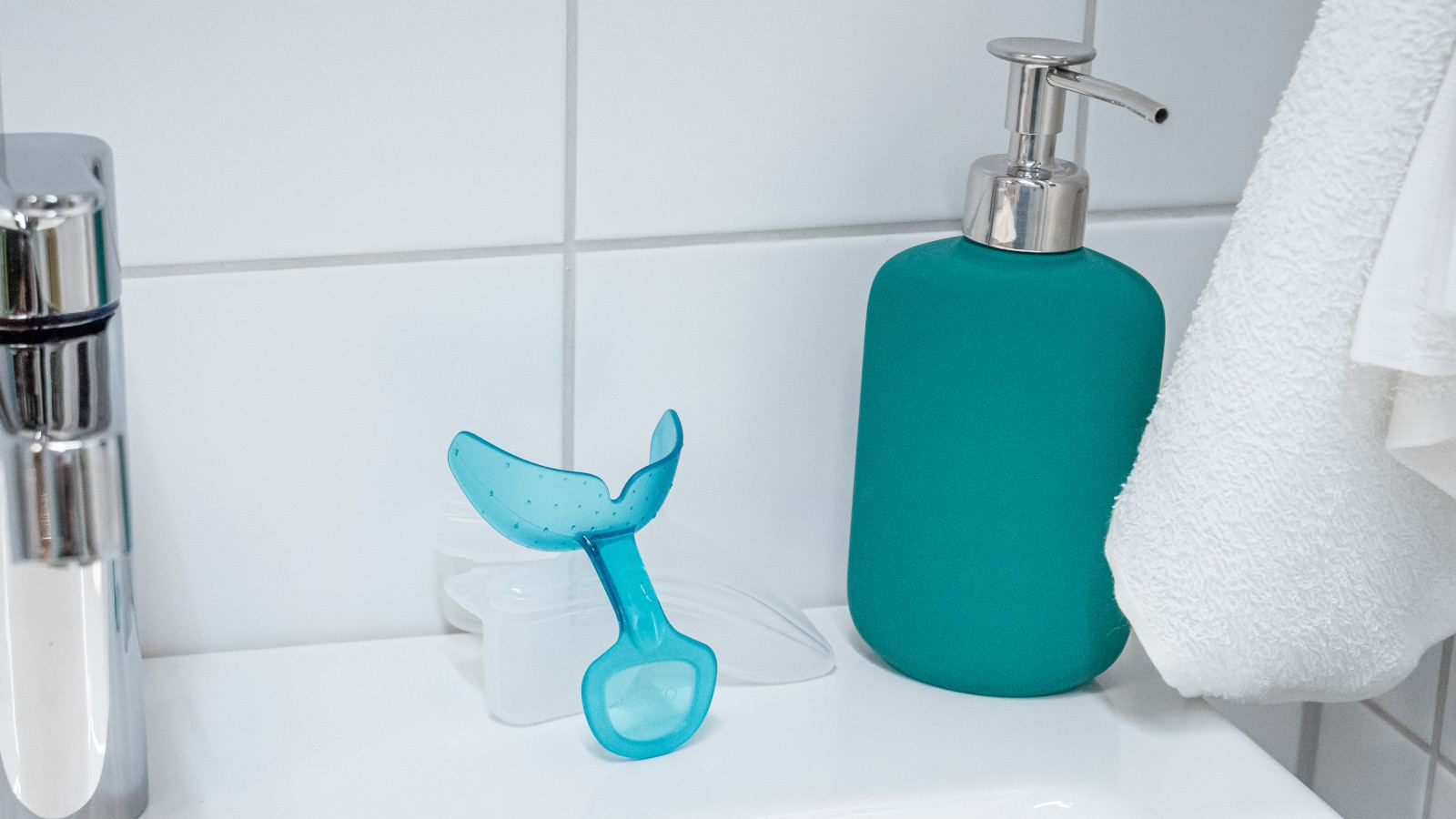
As we have explained before, there is an effective way to treat a Hiatus hernia – the underlying cause of symptoms such as reflux, heartburn, persistent cough, ‘stuck in throat’ and swallowing difficulties.
The treatment consists of simple training of the inner musculature using an IQoro neuromuscular training device. 90 seconds per day gives a proven effect.
Training is simple and comfortable to do, has no negative side effects and you can get started without needing to visit your doctor.
Now we’ll explain why it works.
An earlier mail that we sent you explained what your diaphragm does and what a Hiatus hernia is. Go back and read it again if you’re not sure you understood it.
Simple training that anyone can do
IQoro exercises the body’s own swallowing chain, involving all the148 muscles in a natural pre-programmed chain.
When you train with IQoro, four sensory nerves in the oral cavity are stimulated simultaneously and they convey signals to your brain. In its turn, the brain sends signals down to the involved muscles – both those under your voluntary control (skeletally striated muscles), and those under the control of your involuntary autonomic system (smooth muscles).
These are the same nerve signals that are transmitted in a normal swallow, but are more intense when you train with IQoro, giving a greater effect

This high-intensity training of the muscles involved in the swallowing process strengthens the muscles in the face, oral cavity, upper airways and down to the diaphragm and the stomach.
Think of it as a power swallow where the whole swallowing process and all the affected muscles get to work extra intensively.
It is this simple to train your inner musculature
A training session with IQoro takes just 30 seconds and you can do it wherever you find yourself, and sitting or standing.
- Insert your IQoro inside your lips, but in front of your teeth. Seal your lips around the device.
- Pull forward a little just to break contact with your teeth and gums.
- Pull forward strongly as if to pull it out of your mouth and displace your lips forward.
- Hold that for 10 seconds.
- Rest for 3 seconds and then repeat the 10 second pull.
- Rest and repeat a third time.
That’s your training session over!
Do that 3 times per day. Totally, it is only 90 seconds of exercise per day.
Try to get a routine where you train 3 times every day, preferably before mealtimes or before your brush your teeth.

Now you’ve worked your swallowing process hard you’ll need to rest it for a while, hence our recommendation of at least two hours between training sessions.
The same muscles and nerve pathways are involved in several important bodily functions like breathing, eating, smiling and talking. That why several medical conditions can be addressed in the same way.
For example weakened musculature in the upper airways will be strengthened and this brings relief to those who snore or suffer from sleep apnoea.
A daily routine to make you better
As with all muscle training you need consistency to get results. How long that will take depends on your starting point and your individual circumstances.
Some notice changes after just a few weeks, but the scientific studies that show the effectiveness of IQoro all involved 6 – 8 months training.
Be patient and consistent if you don’t feel results straight away!
The studies were all made with mixed groups of patients – some had a confirmed Hiatus hernia and some had the symptoms but no confirmed diagnosis. There was no difference in the results between these people. In three studies referenced by the UK’s National Institute for Health and Care Excellence (NICE) most patients ceased or reduced their PPI medication before the end of the study.
As symptoms reduced, patients ceased to medicate. Use or cessation of PPIs was under the control of the patients’ doctors. At end-of-training in the 3 studies quoted 93%, 58% and 61% ceased all PPI medication, the remainder mostly reduced dose and intake frequency. All patients reduced their symptoms.
Don’t worry that your hard work will be wasted if you miss a couple of sessions – it won’t. But it will take longer to achieve a full result if you are not consistent.
When you’ve achieved your desired result, remember that you may still need a reduced daily training routine to maintain your improvement. In the same way that muscles get stronger when you train them, they get weaker through inactivity.
There is no reason not to get started
Weakened muscles don’t get stronger on their own; they get better when you train them.
There are no risks associated with IQoro training, and there are no side-effects. However, it can be a good idea to begin carefully to avoid the sore muscles you can sometimes get after training them for the first time for a long time.
As we said earlier, your result will not be affected by whether your Hiatus hernia has been confirmed by examination or not. If you have the symptoms it is almost certain that a weakened muscle is the cause. It is not always straightforward to diagnose the hernia.
If you want to get started right away, even whilst you are waiting for a confirmed diagnosis then you can order one right away. It is important that your doctor rules out other possible serious causes of your symptoms – even if the Hiatus hernia cannot be confirmed.
If your doctor has prescribed you PPI or other medication it is important that you continue with this when you start IQoro training. As symptoms reduce your medication can reduce too, but do this in consultation with your doctor.
Get in touch with us if you have a question
Our Customer Support team is there to help you and support you until your condition is treated. Call us on +44 (0) 20 3966 0723 or email us at [email protected]

There is an active Facebook group for people training with IQoro and everybody is welcome. You will find tips, answers, encouragement and inspiration from those that started before you. Ask them your questions, our Customer Service team will probably answer you too!
We want you to have the best possible help to achieve your goal.